Cradlecrown v2.6: 91 civilizations, new buildings and a migration tutorial
From v2.0 to v2.6: Europe, civilization traits and edicts, lasting reform rules, a twelve-chapter tutorial, redrawn production buildings and a new voiced trailer.
When I released v2.0, Cradlecrown had 65 civilizations. I had been working on their soldiers, landmarks and architecture. Two other problems became clearer in the following releases: civilizations needed to differ in how they played, and players needed to understand what a choice would actually change.
The work through v2.6 follows those two questions. I added Europe, expanded civilization traits and reforms, reworked the interface and made a tutorial for first-time players. The latest release also redraws the production buildings. The live version is now v2.6.1.
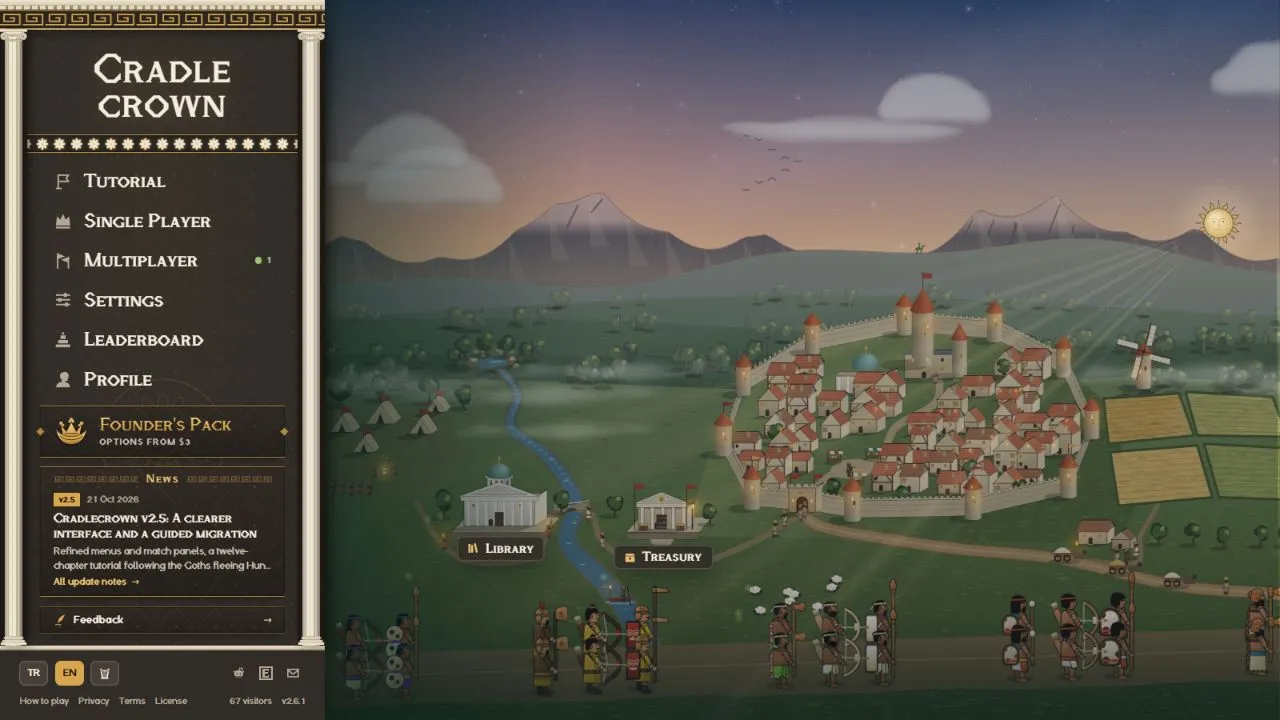
Europe takes the roster to 91
v2.2 added Western Europe and Northern and Eastern Europe. The Hallstatt Celts and Nordic Bronze Age became new starting choices. The Gauls, Etruscans, Normans, Vikings, Kingdom of England, Poland–Lithuania and Teutonic Order are among the 26 additions.
There are now 91 civilizations across seven regions. You stay within your starting region as you advance through four ages, choosing from the civilizations offered at each transition. These are regional alternate-history routes, not claims of direct historical succession.
What choosing a civilization changes
v2.3 made the choice screens more descriptive. v2.4 expanded the choices themselves. The system now has three parts.
A civilization trait works while that civilization is current. Hallstatt earns extra income from worked gold mines. Other traits support fighting at night or training two soldiers at once. Choosing a different civilization replaces the current trait.
A selection edict takes effect when you choose your successor. It can bring reinforcements, settlers, resources or temporary map vision. That gives the transition an immediate consequence for the army or economy you have at that moment.
Reforms remain after they are completed, even when you change civilizations. Examples include training a troop type in pairs, guards recovering health outside combat, or walls repairing themselves while they are not under attack. There are 273 civilization-specific reform choices across the roster. You do not unlock all of them in one match; your route determines which ones you can consider.
The opening also changed. A normal match now starts with the town center, four villagers and six soldiers. The prebuilt barracks and mine are gone. You choose your first buildings and decide how much to invest in resource income before training more troops.
Learning along a migration route
Economy, fighting, taxation, reforms and age choices were a lot to ask a new player to learn at once. In v2.5 I split them into a twelve-chapter tutorial.
Gothic families fleeing Hun raids are looking for a new home. You first lead their escorts to safety, then learn construction, worker assignments, resource deliveries and training. Later chapters cover walls, healing, reforms, age progression and signature troops.
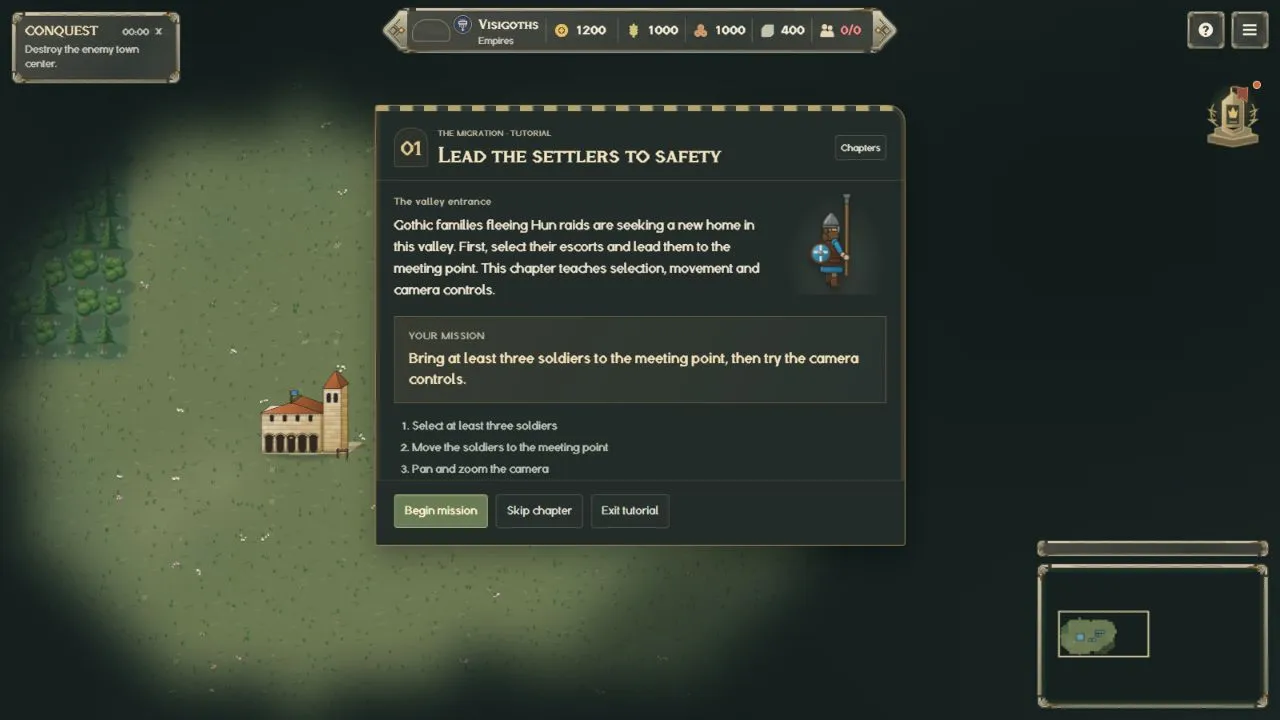
Each chapter starts with its own scene. You can skip a familiar topic or choose another chapter from the list. Production and research take less time in the tutorial, so trying a system does not mean waiting through a long timer. Normal matches keep their usual timings. The story is a fictional learning scenario rather than a reconstruction of a historical campaign.
v2.6: giving buildings their own forms
Putting a few crates beside a house does not make a convincing warehouse. Some civilizations reused one main building shape too often across different production structures. Much of the v2.6 art work addresses that repetition.
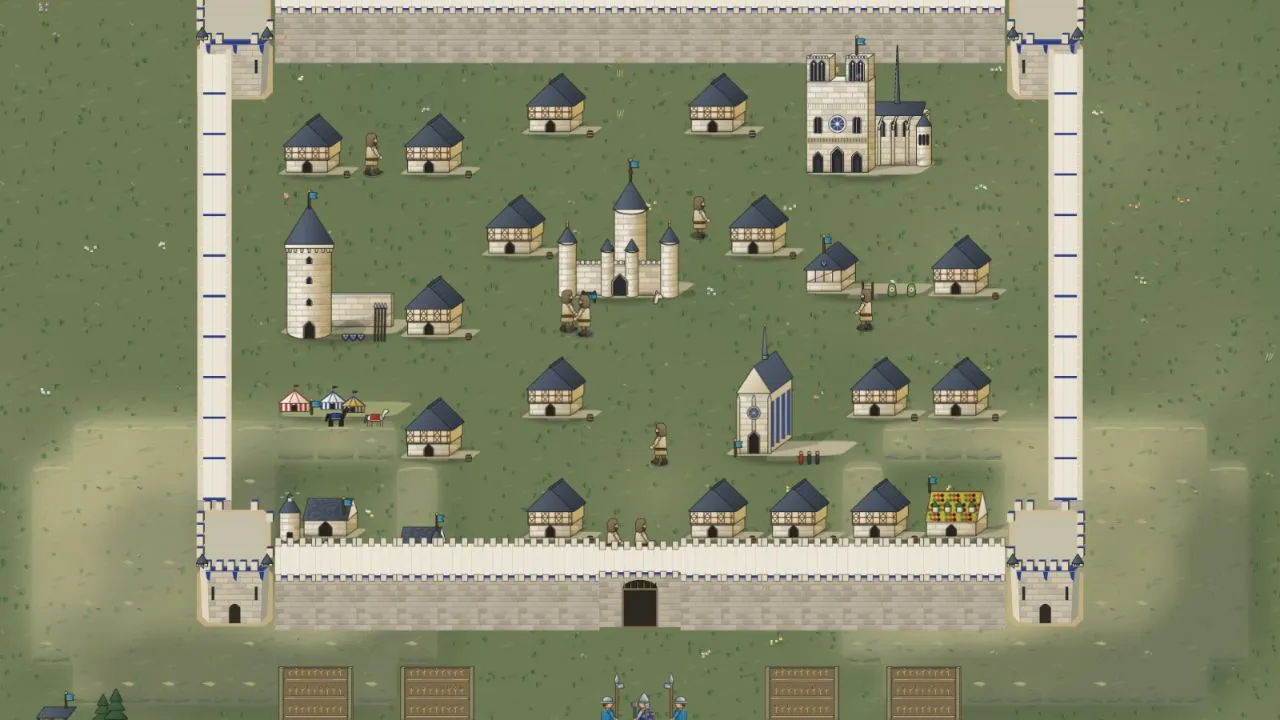
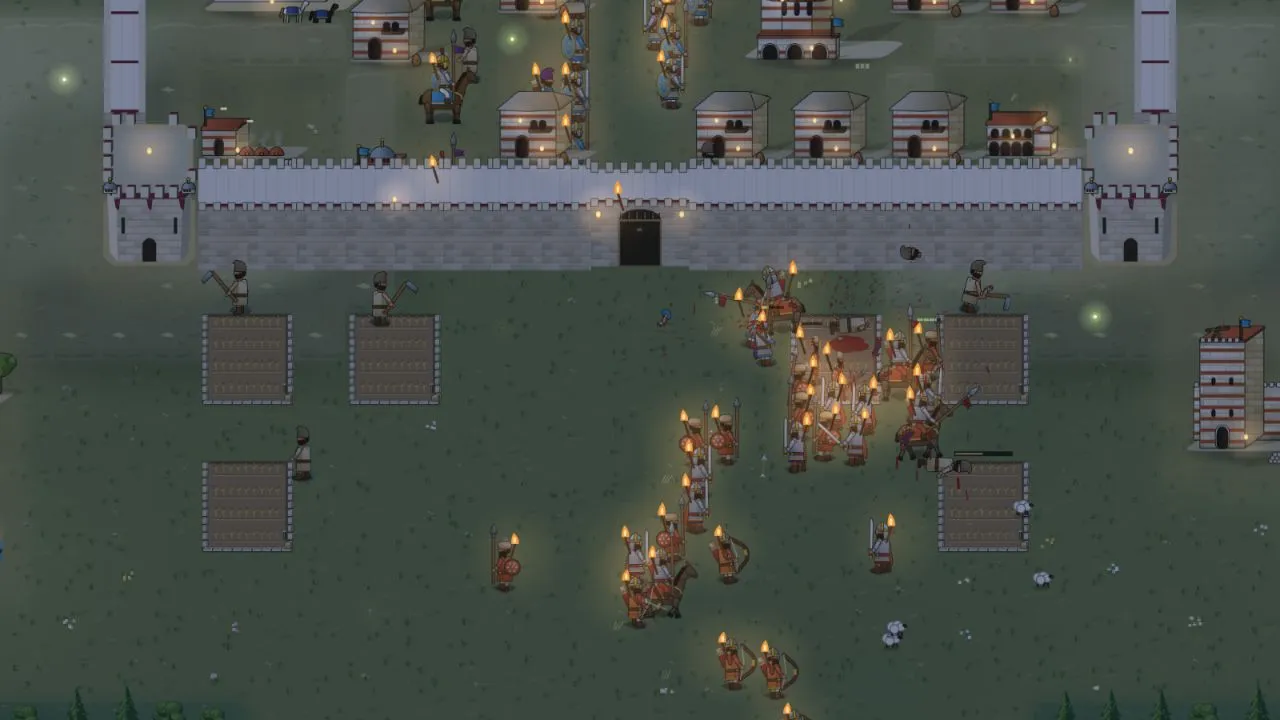
I reworked barracks, stables, archery ranges and production yards around their functions as well as their architecture. You need to read what a building does within a town, while still recognizing the civilization. France’s stone towers and dark roofs, Ming’s enclosed yards and Sumer’s mudbrick buildings look different even in the same settlement layout.
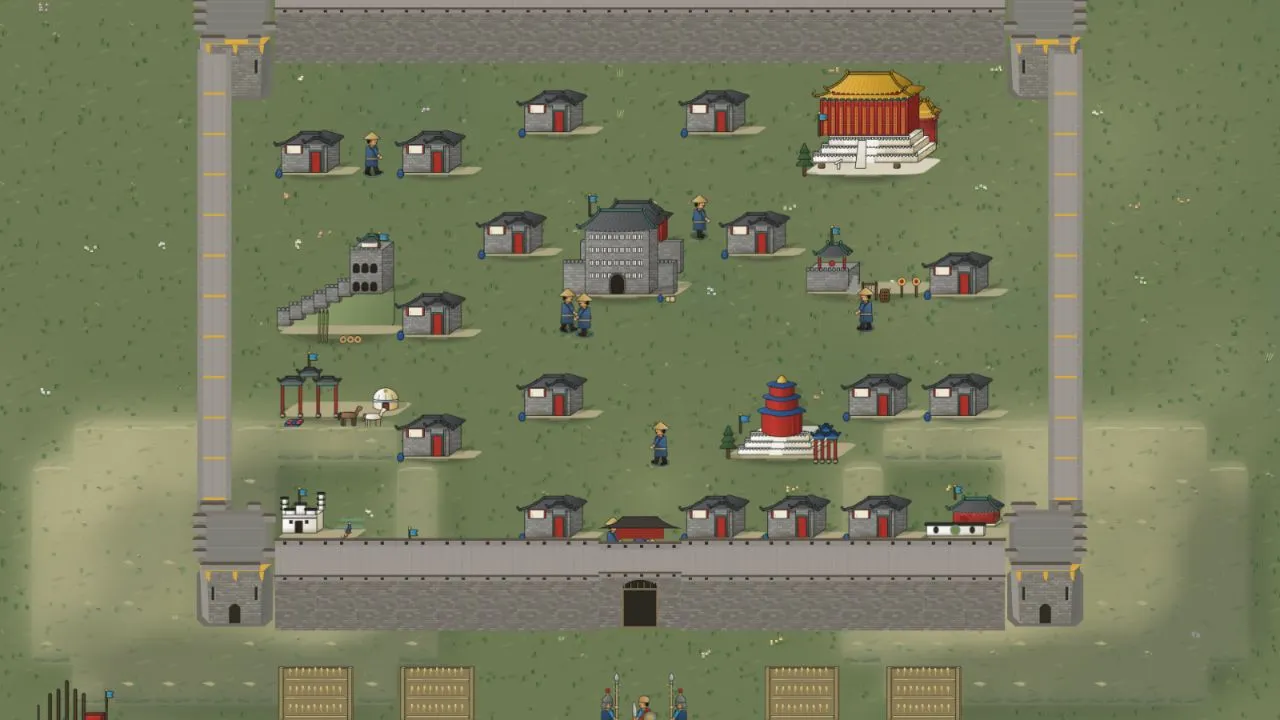
The town and battle images in this post are staged with the current game renderer to show the art. They are not recordings of a live online match. The menu and tutorial images were captured from the live v2.6.1 build.
A new voiced trailer
The new trailer follows a child choosing civilization emblems from the mobile above a cradle. As the child grows, the room changes and the world outside moves from early settlements to dynasties. I wanted a short story that connected the game’s name with its four ages.
The towns use the current v2.6 buildings. The room and growing ruler were created for the trailer; raising a child or managing a dynasty’s family is not an in-game system.
Play the current build
Cradlecrown is free in the browser, against the AI or online in rooms for 2–8 players, with bots available. English and Turkish are supported. If you are new, Tutorial is at the top of the main menu.
v2.6 also added a feedback form to the menu, alongside the in-match report option. v2.6.1 reworks delivery of those messages and keeps feedback awaiting delivery in an outbox.