Cradlecrown v2.3: Understanding your civilization
Civilization selection now explains strengths, drawbacks, signature troop rules and the legacy kept in later ages. The main menu also has a visitor count.
Choosing a civilization in Cradlecrown means choosing how your economy will grow, which soldier you will rely on and what you will carry into later ages. The selection screen did not make all of that clear enough. In v2.3, I rewrote the way it explains those choices.
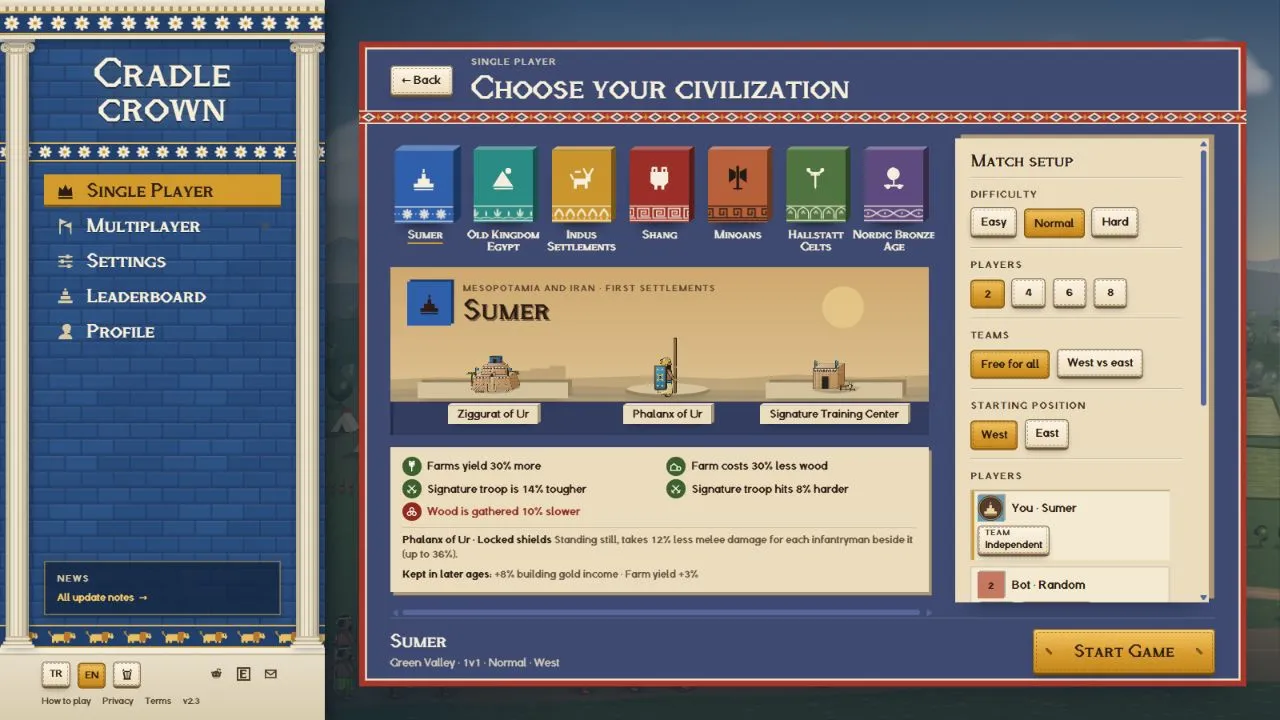
The screenshots in this post were captured from a local build of the v2.3 code.
Strengths and their price
The screen now describes what a civilization does better in short sentences. Resource yield, training time, building costs and signature troop strengths appear together. Advantages are green and drawbacks red, with small symbols showing what each line concerns.
Sumer, for example, has farms that yield 30% more, but gathers wood 10% slower. You can see both the benefit of a farming opening and the cost of a plan that needs a lot of timber before committing to it.
Old Kingdom Egypt offers a different balance: sturdier new buildings, a cheaper pyramid and lower wood costs for defensive structures, but soldiers train 12% slower. The same list explains why it suits a defensive position and what you need to account for when preparing an early attack.
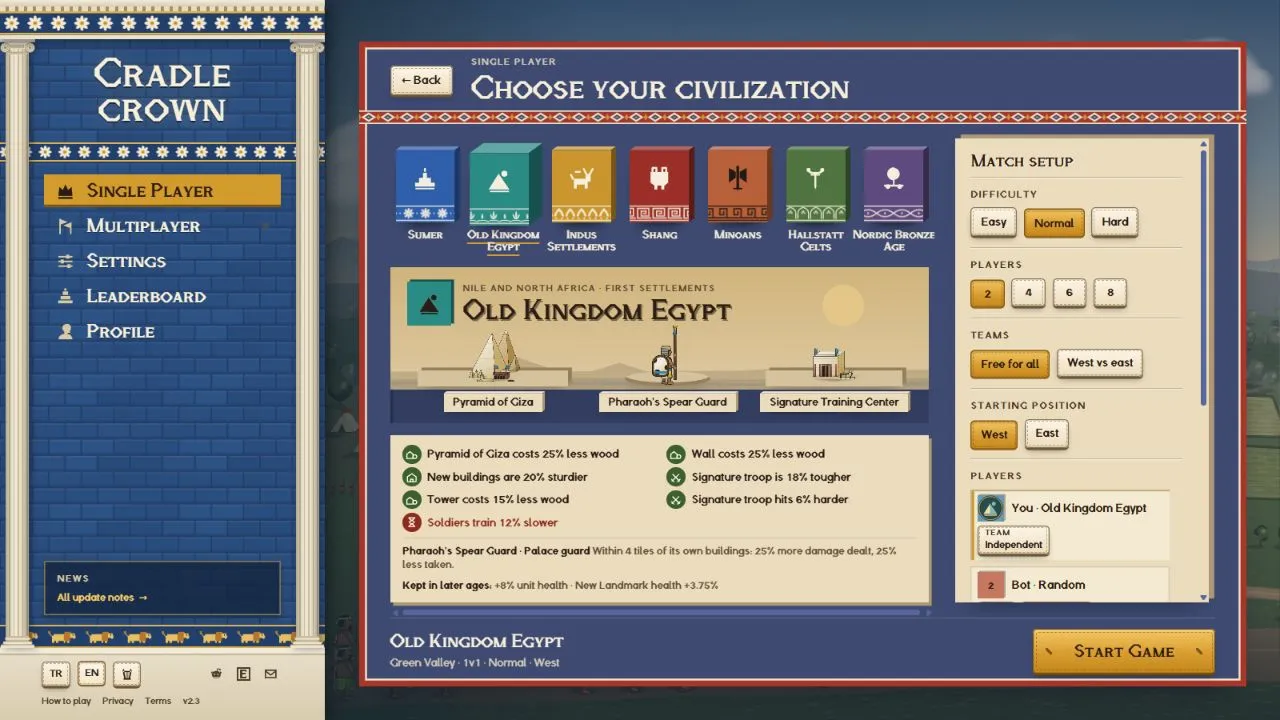
How does the signature troop fight?
A soldier’s name and appearance do not tell you how to use it. The description now includes the troop’s name, its ability and a sentence explaining when that ability takes effect.
The Phalanx of Ur takes less melee damage for each infantryman beside it while standing still. The Pharaoh’s Spear Guard fights harder and takes less damage near its own buildings. One rewards keeping the line together; the other rewards fighting around your settlement. The selection screen now explains that difference.
What stays in later ages
A civilization’s current advantages are shown separately from its lasting legacy. The “Kept in later ages” line identifies the gains that remain after you move on to another civilization. A choice that helps the economy now and an inheritance that shapes the whole match are easier to weigh when they are clearly separated.
These descriptions are used in single-player setup, multiplayer rooms and the in-match age choice. Their numbers come from the same multipliers used by the simulation, rather than a separate list maintained for the interface. This update makes the existing rules clearer when you choose.
A small visitor count
The bottom of the main menu now shows the total number of different browsers that have opened the game. Refreshing does not count the same browser again: it keeps only a flag remembering that it has already been counted, with no identifier.
This is neither the number of online players nor the number of matches played. Another browser, or clearing browser data, can count again, so it should not be read as an exact count of people either. The counter stores a total on the server; an IP address may be held in memory for up to a day to limit fake counts.
The game is at cradlecrown.com. Send bugs and suggestions through r/cradlecrown or to [email protected].